Career counselling: questions and answers
Q1: Dear Mr Abidi, I am a pre-engineering student and am confused between Electrical Engineering, Computer Engineering and Computer Science. How should I decide which field is right for me? (Bilal Ahmed, Rawalpindi)
Ans: Dear Bilal, these three fields overlap in some areas but have different academic and professional directions. Electrical Engineering generally focuses on electricity, electronics, power systems, control systems and related technologies. Computer Engineering combines hardware and software, including computer architecture, embedded systems, networks and digital systems. Computer Science has a stronger emphasis on programming, algorithms, software development, artificial intelligence, data science and computing theory. Your choice should depend on whether you are more interested in hardware and physical systems, the combination of hardware and software, or software and computational problem-solving. Also examine the curriculum, professional accreditation, university facilities, internship opportunities and career pathways before making your decision.
Q2: Dear Sir, I want to study business because I hope to start my own company in the future. Should I study BBA, Accounting and Finance, Economics or Entrepreneurship? (Ayesha Khan, Karachi)
Ans: Dear Ayesha, entrepreneurship does not necessarily require a degree specifically titled ‘Entrepreneurship.’ A BBA can provide broad exposure to management, marketing, finance, human resources and business strategy. Accounting and Finance can develop strong financial and analytical skills, while Economics provides a deeper understanding of markets, business environments and economic decision-making. Entrepreneurship programmes may focus more directly on innovation, venture creation and business development. Consider the skills you want to develop rather than choosing a degree only because of its title. Whichever programme you select, try to complement your academic studies with internships, practical projects, financial literacy, communication skills and exposure to real businesses. A successful entrepreneur needs a combination of knowledge, problem-solving ability, resilience and practical experience.
Q3: Dear sir, I received admission offers from several universities for the same degree. How should I decide which university to attend?
(Hamza Siddiqui, Islamabad)
Ans: Dear Hamza, choosing a university should involve much more than comparing rankings or the name of the institution. First examine whether the programme is properly recognised or accredited where applicable and whether its curriculum matches your academic and career objectives. Compare the quality and accessibility of faculty, laboratories, libraries, industry links, internships, international opportunities and student support services. You should also consider total cost, accommodation, location, transport and the overall learning environment. If possible, speak with current students and graduates and review the actual curriculum rather than relying only on promotional material. The right university is one where the programme, learning environment, resources and opportunities are compatible with your goals and circumstances.
Q4: Dear sir, I am interested in studying abroad but I am worried that my chosen degree may not have good employment opportunities when I graduate. How can I assess the future scope of a degree? (Sara Ahmed, Faisalabad)
Ans: Dear Sara, no degree can guarantee a particular job or salary several years into the future, so it is important to look beyond current
trends. Examine the skills taught in the programme, the industries that employ graduates, the types of roles graduates enter, professional recognition requirements and opportunities for postgraduate study. You should also consider how transferable the skills are across industries and countries. Speak with university career
services, professionals and recent graduates, and review reliable labour-market information where available. Most importantly, distinguish between a temporary trend and a field with a sustainable need for skilled professionals. Your employability will depend not only on the degree itself but also on the skills, practical experience, communication abilities, adaptability and professional development you build during and after your studies.
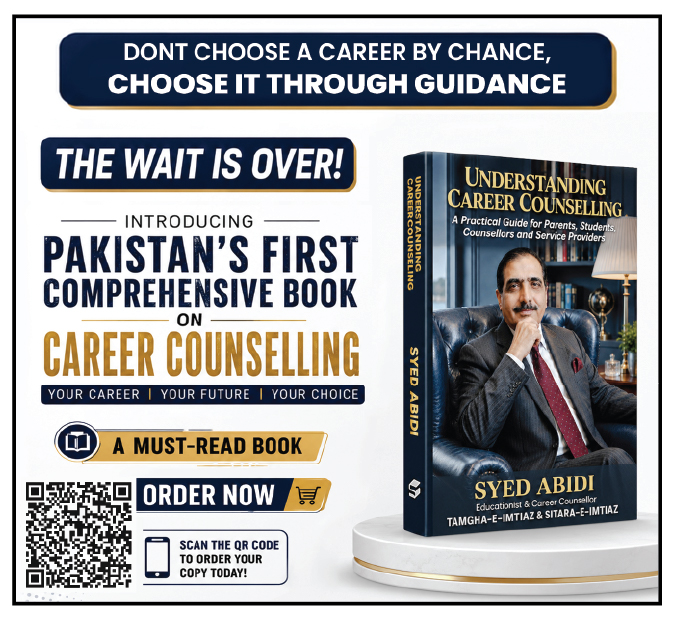
(Syed Azhar Husnain Abidi is a renowned educationist in Pakistan, with more than 20 years of experience as provider of education counselling services. He has represented Pakistan in over 100 national and international seminars, conferences and fora. He is a recipient of the most coveted civil award Tamgha-e-Imtiaz).